Wall Street saw a dramatic rotation this week, as investors fled once-reliable software stocks in the wake of mounting fears that generative artificial intelligence could permanently erode demand for traditional digital services.
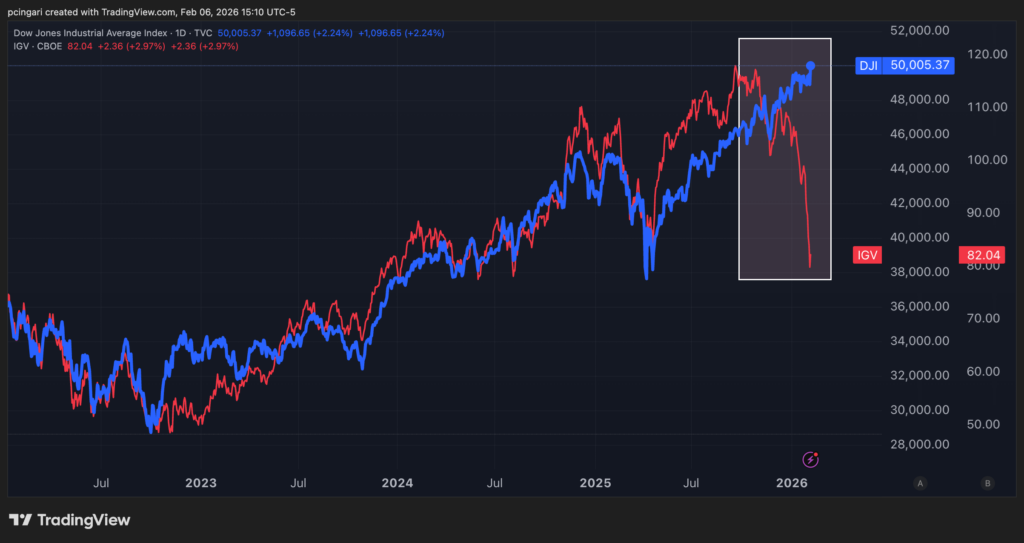
Software stocks – tracked by the iShares Tech-Expanded Software Sector ETF (NYSE:IGV) – tumbled nearly 20% over the week, marking one of the fund’s worst weekly performances since the 2022 tech rout.
Names that once defined growth and innovation are now under pressure, as emerging AI platforms such as Anthropic's Claude Cowork and Google's Genie 3 threatened to cannibalize the very sectors they helped build.
Palantir Technologies Inc. (NASDAQ:PLTR) – the poster-child of the AI-led software rally – fell for the fourth straight week. Other software giants such as ServiceNow Inc. (NASDAQ:NOW), Oracle Corp. (NYSE:ORCL) and Intuit Inc. (NASDAQ:INTU) all posted double-digit losses for the week.
While tech sold off sharply, the Dow Jones Industrial Average notched fresh record highs Friday, topping the 50,000-point milestone, with its limited tech exposure proving to be a key advantage.
The blue-chip index outperformed the Nasdaq 100 for seven consecutive sessions, its longest such stretch in nearly four years.
Chart Of The Week: Dow Jones Rallies To Records, While Software’s AI-Trade Falls Apart
Despite Alphabet Inc. (NASDAQ:GOOGL) and Amazon.com Inc. (NASDAQ:AMZN) delivering strong earnings, shares plummeted amid concerns that soaring AI infrastructure spending could reduce near-term shareholder returns.
Bank of America's chief investment strategist, Michael Hartnett, said investors should go "Long Detroit, Short Davos," favoring Main Street-focused cyclicals over Silicon Valley giants, suggesting a fundamental shift in market leadership.
According to Gina Bolvin, president of Bolvin Wealth Management Group, the takeaway for investors is to “lean into quality businesses with strong earnings power and be prepared for more rotation, not straight-line gains.”
The pivot away from tech was not just financial — it was also tied to labor concerns.
The latest Challenger, Gray & Christmas report announced 108,435 job cuts in January, up 205% from December. AI accounted for 7,624 of those, or 7%, the highest monthly share since tracking began in 2023.
Nearly 80,000 layoffs have been linked to AI since then. At the same time, consumers appeared less anxious about inflation. The University of Michigan's February survey showed one-year inflation expectations fell to 3.5%, their lowest since January 2025, coinciding with Donald Trump's second inauguration.
In short, investors are questioning the once-unshakable dominance of software and tech. If AI is the disruptor, then value, cyclicals and tangible businesses may be the beneficiaries.
Image created using artificial intelligence via Midjourney.
- No comments yet. Be the first to comment!