Investors eager to ride a SpaceX IPO need to be strategic, because the rocket maker remains private and direct secondary-market access is limited to institutions and ultra–high-net-worth buyers.
For most retail investors, the most practical path is through public companies and funds that already hold SpaceX equity.
- SATS stock is moving. See the chart and price action here.
Why SpaceX Pre‑IPO Demand Is Surging
The Elon Musk-led company is reportedly weighing a June IPO that could raise up to $75 billion at a $1.75 trillion valuation, making it one of the largest listings ever.
Private-market estimates already peg the company's valuation near $1.4 trillion dollars after recent funding rounds, underscoring how much of the upside has accrued before public trading begins.
Public Companies With SpaceX Stakes
Several listed firms give indirect exposure to SpaceX via balance‑sheet stakes.
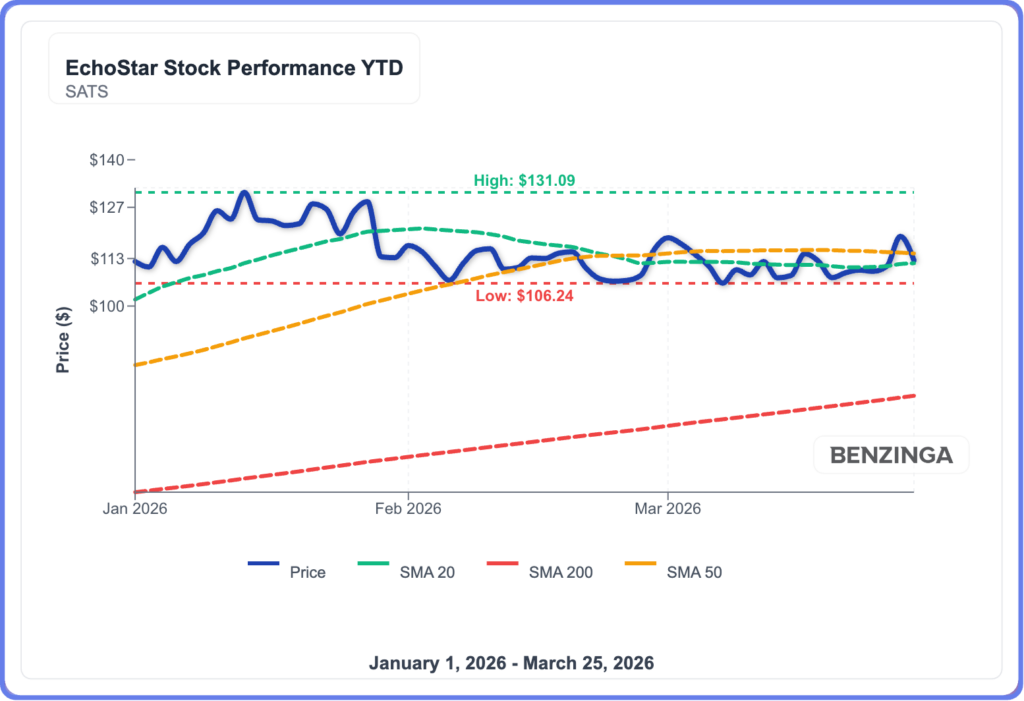
EchoStar Corp. (NASDAQ:SATS) has emerged as a de facto public proxy after spectrum‑for‑equity deals left it with a SpaceX stake recently valued at around $11.1 billion, which helped drive a sharp move higher in its stock.
The chart below shows SATS year-to-date performance:
Alphabet, Inc. (NASDAQ:GOOGL) (NASDAQ:GOOG) invested about $900 million in the company in 2015 for roughly 7% of the company at the time, a position that could be worth more than $100 billion at a $1.5 trillion IPO valuation and has already produced multi‑billion‑dollar mark‑to‑market gains.
Bank of America Corp. (NYSE:BAC) joined the cap table in 2018 with an estimated 250 million dollar investment at a 30 billion dollar valuation, a small piece of its portfolio but a potentially outsized upside kicker.
Funds Focused On SpaceX
For more concentrated exposure, investors can target mutual funds and ETFs that disclose sizable positions.
Baron Partners Fund (BPTRX) has turned an early, roughly 4% allocation in SpaceX into a massive position now representing about 32% of net assets after successive valuation markups.
Sister strategy Baron Focused Growth Fund (BFGIX) lists SpaceX as a core holding at roughly 24.2 percent of assets, reflecting a similarly high‑conviction bet on launch and Starlink economics.
On the venture side, ARK Venture Fund (ARKVX) holds SpaceX as its largest position, with allocations in the low‑teens percentage of assets, bundling the name with other private disruptors.
The ERShares Private‑Public Crossover ETF (NASDAQ:XOVR) is the only U.S.‑listed ETF that explicitly holds SpaceX.
As of late 2024, the company accounted for about 12.3% of assets, and the manager later disclosed that it had increased the stake to roughly 11% of AUM as valuations climbed, providing a diversified yet meaningful slice in a single ticker.
Key Tickers At A Glance
| Vehicle | Type | SpaceX Role |
| EchoStar – SATS | Operating company | Large balance‑sheet equity stake proxy. |
| Alphabet – GOOGL, GOOG | Operating company | Early investor; large but diversified stake. |
| Bank of America – BAC | Operating company | Smaller, high‑upside strategic position. |
| Baron Partners Fund – BPTRX | Mutual fund | Extremely concentrated SpaceX exposure. |
| Baron Focused Growth Fund – BFGIX | Mutual fund | High‑conviction, mid‑20s percent weight. |
| ARK Venture Fund – ARKVX | Interval/venture fund | Largest holding, double‑digit weight. |
| ERShares Private‑Public Crossover – XOVR | ETF | Only ETF with a disclosed SpaceX slice. |
The Takeaway
As the SpaceX IPO speculation intensifies, investors can use concentrated Baron funds and shares of SATS for higher torque or diversified vehicles like GOOGL, BAC and XOVR shares for more measured exposure to SpaceX's eventual public‑market debut.
Photo: Kemarrravv13 / Shutterstock
Login to comment