The US has tightened its grip on energy supplies flowing to China this year, boosting Washington's leverage in its strategic contest with Beijing over trade routes and critical minerals.
US military actions against Iran and Venezuela have disrupted as much as 18% of China's oil imports. The moves threaten to erode Beijing's leverage over the US economy — a key Trump administration objective — and unwind years of its economic dominance.
The conflict has upended the energy and minerals balance between the world's two largest powers, exposing China's vulnerabilities while reinforcing US leverage ahead of high‑stakes negotiations.
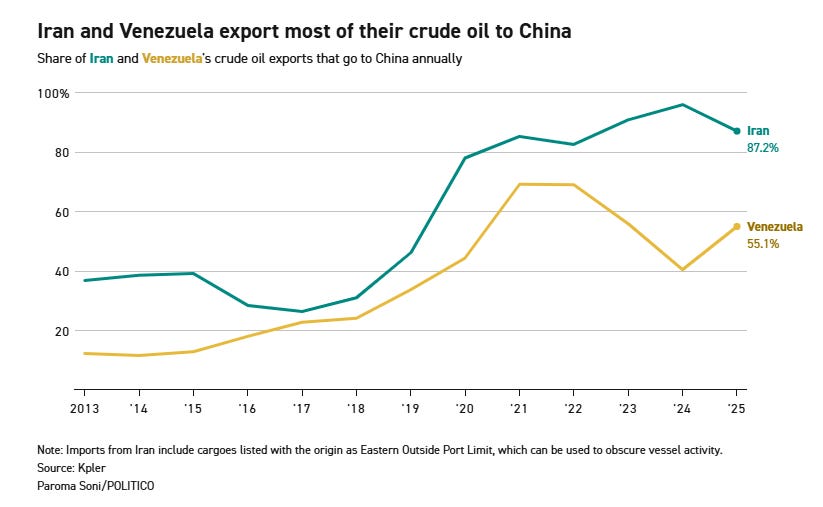
The US strikes registered "as a blow to China's diplomatic and economic statecraft," James Kynge, Senior Research Fellow for China and the World, Asia-Pacific Programme, at Chatham House wrote on March 10. "Beijing has forged a comprehensive relationship with both countries that spanned diplomacy, energy, trade, infrastructure, and even military cooperation."
Washington may need to maintain security in the Straits of Hormuz, ensuring this vital waterway remains open, to strengthen US President Donald Trump's hand in talks with Chinese leader Xi Jinping in May. Iran still has the ability to disrupt shipping through the Strait, which handles about 20% of global energy flows.
Iranian officials have condemned the US actions and warned that continued pressure could escalate regional instability. Analysts say the expanded US deployments raise the risk of miscalculation with Iranian forces.
China Loses Strategic Partners: Iran and Venezuela
To strengthen its military influence over the Middle East, the US has dispatched about 1,000 US soldiers with the Army's 82nd Airborne Division. Two Marine Expeditionary Units and Amphibious Ready Groups have also recently deployed to the region, adding significant firepower.
With additional forces in position, the US could consider seizing Kharg Island, which accounts for virtually the entirety of Iran's oil and gas exports. The US could also target the South Pars gas field, which provides the majority of Iran's energy, according to the EIA. Either move would be complex and risk severe market volatility.
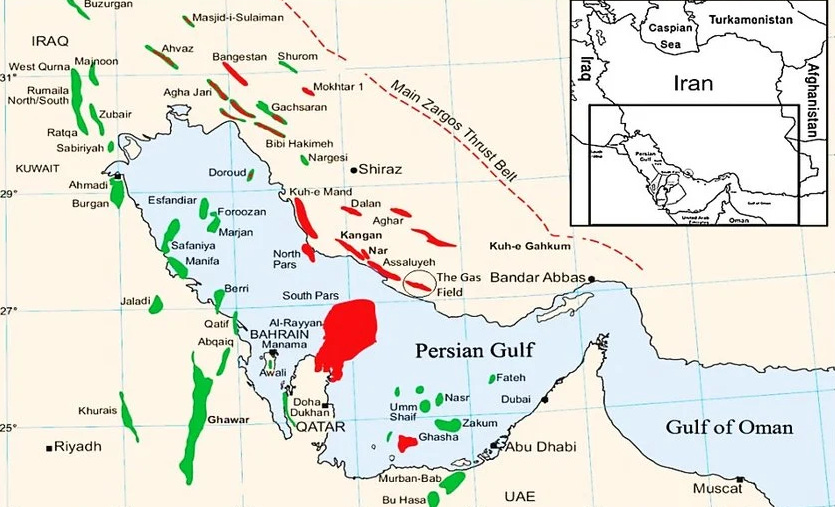
That could leave a weakened Iranian regime economically dependent on the US. That shift would carry major implications for China. Beijing positioned Iran as a counterweight to US hegemony over global oil supplies.
Some analysts have argued that China may still retain leverage through its economic ties with Gulf producers, particularly Saudi Arabia and the United Arab Emirates. The two remain central to Beijing's long‑term energy strategy.
Even so, Iran remained central to Beijing's balancing strategy.
China Had Relied on Iran to Counterbalance US in Gulf
China counterbalanced the US's alliances with Arabian Gulf countries through its Comprehensive Strategic Partnership with Tehran. The two countries signed in 2021 a 25-year, $400 billion deal to invest in Iran's energy, infrastructure and banking sectors, partly in exchange for discounted oil exports to China.
"As the US strikes these Chinese partners and goes after Chinese strategic assets, Beijing is finding that its strategy of courting US adversaries threatens to jeopardize some of its interests," Kynge wrote.
China is the world's largest manufacturer and the largest importer of energy and oil. Beijing imports about 70% of its oil needs, or about 11.6 million barrels per day. It is also the world's largest importer of liquefied natural gas.
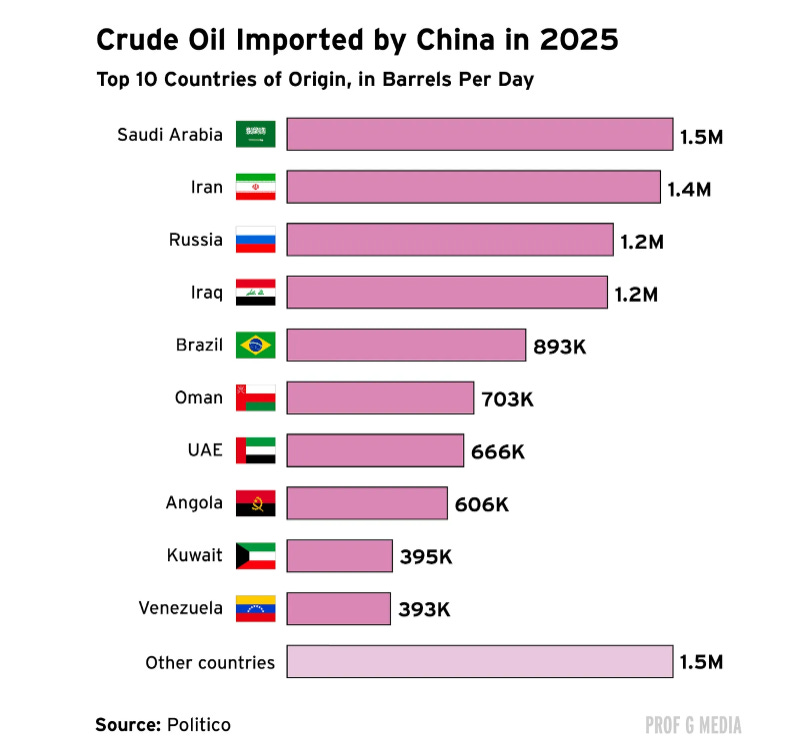
China consumes approximately 16 million barrels of crude oil per day, with about five million barrels per day from the Middle East, including over a million barrels per day from Iran, according to Kpler. Another 18% comes from Russia, and China holds large stockpiles to absorb shocks.
Chinese Imports Hit Record High in 2025
China hit record imports in 2025 of 11.55 million barrels per day and holds 90+ days of strategic reserves, though disruptions remain a risk. Russia, Brazil, and West Africa could increase shipments if Middle Eastern flows tighten.
Chinese officials have not publicly acknowledged the scale of the disruption, and state media has emphasized China's strategic reserves and long‑term contracts as buffers against volatility.
China has long viewed diversification of energy sources as a national priority, and Beijing may accelerate alternative supply arrangements in response.
The Strait of Hormuz risks affecting Gulf oil flows to Asia, which could represent a significant constraint on China's daily energy consumption, according to analysts. If sustained, this could impact Chinese refiners. Sinopec, the biggest refinery in Asia by capacity, reportedly slashed its run rates by 10%.
US Is World's Largest Oil Producer
In contrast, the US is the world's largest producer of oil and gas, according to the EIA. The US consumes over 20 million barrels of crude oil per day.
The US produces more than 13 million barrels per day and imports 4.5 million barrels per day from Canada. Arabian Gulf imports accounted for just 8.5% of the US supply in 2024.
The US is also the largest natural gas exporter in the world, providing 18% of the world's LNG supplies. Cheniere Energy, Inc. (NYSE:LNG) can export more than 51 million metric tons of LNG per year. Venture Global LNG (NYSE:VG) can ship more than 37 million tons.
Shares of Cheniere Energy jumped to an all-time high on March 19. Venture Global rose as much as 13% on Thursday after reports of Iran attacks on Qatar LNG facilities. Economists have warned that prolonged Gulf instability could still push global prices higher, affecting US consumers despite America's production strength.
US Energy Leverage Strengthens Its Hand
The Trump administration's push to control global energy supplies has emerged as a counterbalance to Chinese dominance of critical minerals. China extended export controls on critical minerals, such as antimony, and other rare earth elements in October, which US officials described as supply chain coercion.
In November, as Trump and Xi met, Beijing suspended the export controls on rare earth materials and equipment for one year. The suspension included lithium‑battery materials, gallium, germanium, antimony, tungsten, graphite, and some "super‑hard" dual‑use materials, plus certain U.S.-specific dual‑use licensing rules.
"China has long made clear its willingness to use its economic heft to advance the Chinese Communist Party's strategic interests," the US-China Economic and Security Review Commission wrote in October. "It has intensified this strategy by prioritizing control over key supply chains. China has already deployed export controls on critical minerals as a coercive tool, including to seek policy concessions in trade negotiations with the United States and to punish other countries."
Critical minerals underpin US military production and domestic manufacturing — giving Washington strategic exposure to China's dominance of global supply chains. China controls about 70% of global critical minerals and nearly 90% of rare earth processing — leverage that shapes industrial and defense capabilities.
Oil, Critical Minerals Central to Trump, Xi Talks
With Trump and Xi meeting in May, control of these materials has become a central front in the US‑China supply‑chain contest.
The US administration wants to secure a negotiated trade outcome from a position of strength built on its control of global energy chokepoints. To accomplish this, Trump has used the military to reverse Chinese geopolitical gains and economic power in Iran and Venezuela.
Critics warn that weaponizing energy and minerals could heighten long‑term instability and complicate diplomacy with allies and rivals.
"This year marks the beginning of managed confrontation between the US & China," Velina Tchakarova, a Geopolitical Strategist, wrote on X on Wednesday. "This is the core of the new Cold War – direct conventional and nuclear confrontation between the two superpower blocs must be avoided, but proxy wars number will increase."
Disclaimer: Any opinions expressed in this article are not to be considered investment advice and are solely those of the authors. European Capital Insights is not responsible for any financial decisions made based on the contents of this article. Readers may use this article for information and educational purposes only.
Benzinga Disclaimer: This article is from an unpaid external contributor. It does not represent Benzinga's reporting and has not been edited for content or accuracy.
Login to comment