President Donald Trump has opened a new front in the transatlantic trade fight, warning that any European digital tax targeting US tech giants will trigger a 100% tariff on all goods shipped to the US.
His threat arrived days after the EU and US ratified a trade deal. It capped most European export tariffs at 15% through 2029. The agreement excluded digital services taxes, leaving a major unresolved dispute between the two sides.
"Numerous European Countries have been discussing the imminent implementation of a Digital Services Tax on American Companies," Trump wrote on Truth Social. "Any Country that imposes such a Tax will immediately be met with a 100% TARIFF on any and all Goods sent to the United States of America," he added.
A Section 301 review signed by Trump in February 2025 listed seven jurisdictions with active and proposed digital services taxes. The review named France, the UK, Italy, Spain, Austria, and Turkey with digital services taxes in force or under review.
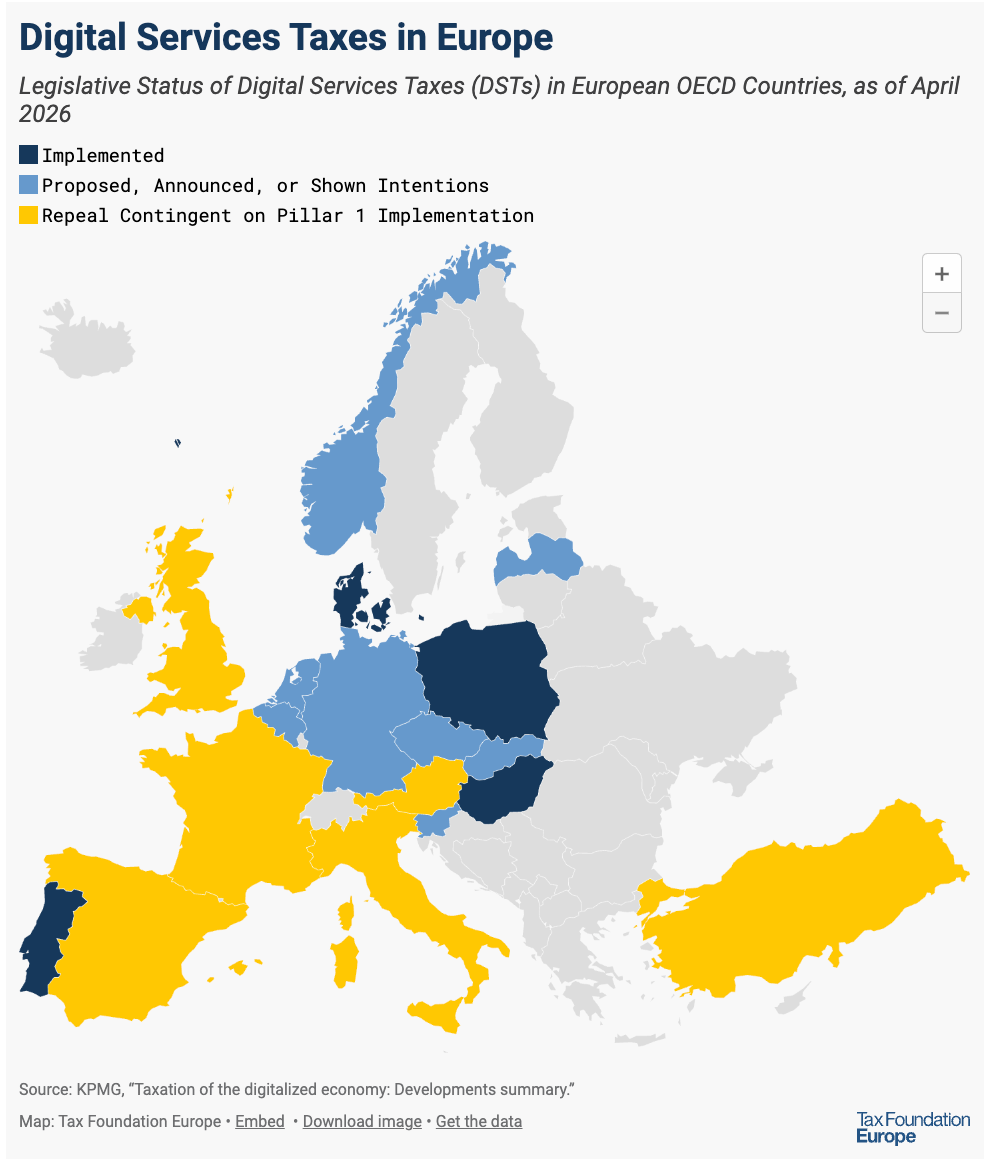
Digital taxes have become a central EU‑US flashpoint, threatening tariff escalation, market volatility, and a widening geopolitical rift. US tech firms warn Europe’s digital tax policies unfairly target American platforms. It could also increase risks of fragmented regulation and escalating economic conflict.
Trump threatened that the tariffs would supersede trade deals, "whether implemented, signed, or not." He said the tariff will be imposed immediately if countries move forward with their digital taxation plans.
EU Responds to Threat
The European Commission responded immediately, defending the legitimacy of digital taxation.
"Unilateral measures targeting such legitimate policies are unjustified," Commission spokesperson Olof Gill said. "If pursued, the EU will respond swiftly and decisively to defend its rights and regulatory autonomy."
Gill described the EU’s digital tax frameworks as "non-discriminatory." He noted the rules "apply equally to all large companies, regardless of their origin."
The Commission separately confirmed that member states "have the sovereign right to regulate economic activity in their territories." France is one of several EU countries already exercising that sovereignty.
France has applied a 3% digital services tax since 2019, covering revenue from digital services, online advertising, and data collection. Trump warned last month he would impose a 100% tariff on French wine and champagne if Paris kept the tax.
Trump Attacks UK Digital Tax
The UK introduced its digital services tax in April 2020, applying a 2% levy on revenue from search engines, social media platforms, and online marketplaces. The tax applies only to large multinational companies with global digital revenues above £500 million and more than £25 million from UK users.
The UK designed the measure as an interim step pending a global OECD agreement that never fully materialized. This has left the tax in place far longer than intended. The UK’s digital services tax raised £944 million in the 2025‑26 tax year, a 17% increase from the previous year.
Trump has said the tax exploits "the top companies in the world." His predecessor, Joe Biden, also raised concerns about the levy.
Companies falling within scope include Alphabet Inc. (NASDAQ:GOOGL), Meta Platforms, Inc. (NASDAQ:META), Amazon.com, Inc. (NASDAQ:AMZN), and Apple Inc. (NASDAQ:AAPL). They generate substantial revenue from the UK’s £40.5 billion digital ad market.
Trade Stakes Are High
The dispute carries significant economic weight for both sides. The EU’s goods trade surplus with the US reached €199.6 billion in 2025.
The US recorded a $218.8 billion goods trade deficit with the EU in the same year. Trump has repeatedly cited this imbalance to justify tariff threats.
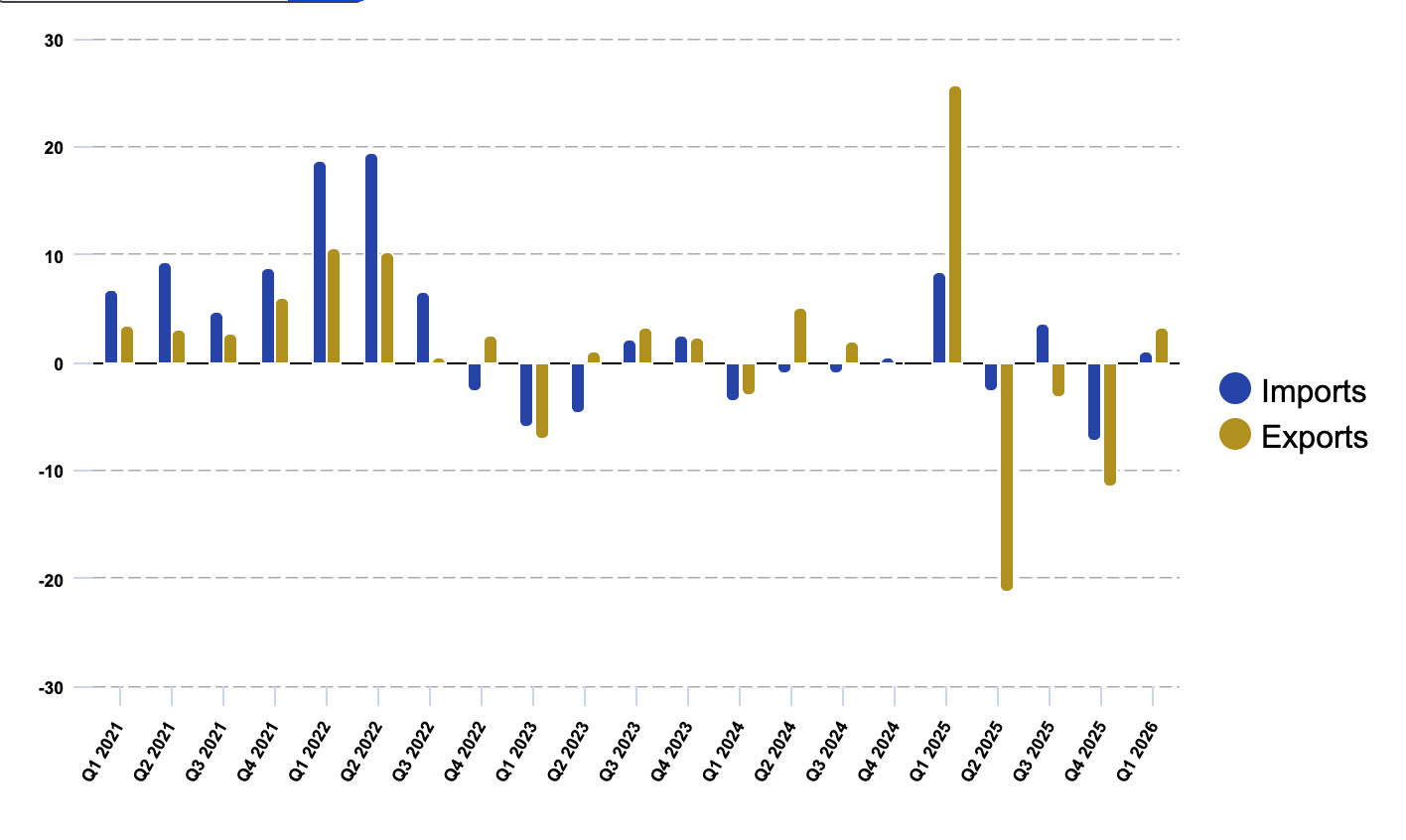
That EU goods surplus has been narrowing for several quarters. It peaked near €80 billion in the first quarter of 2025. It fell to €34 billion in the first quarter of 2026, as earlier tariff rounds took hold.
If services trade is included, the EU’s overall surplus shrinks to around €20 billion, or 1% of total EU-US trade. The US runs a large services surplus with Europe, driven heavily by digital and tech services.
US Uses Its Leverage
Analysts at the Centre for European Reform argue Washington is using market access as leverage to shape how other countries regulate and tax US firms. The think tank wrote that such measures "represent a dramatic attempt to intervene in other countries’ internal regulation and taxation."
This would effectively "condition access to the US market on trading partners’ compliance with US preferences," a precedent the EU "cannot accept," the center wrote. Their analysis highlights the geopolitical stakes surrounding digital taxation.
The Institut Jacques Delors has separately cautioned that Brussels needs to tread carefully as it considers its next steps. The institute said the EU could use the threat of a bloc‑wide digital tax as leverage in trade talks.
The EU could abandon that threat if Washington revisits the OECD’s stalled global tax framework, the institute said. The Trump administration rejects Pillar One, which would tax digital giants based on user location. It remains open to renegotiating Pillar Two.
EU Has Structural Problems
The EU faces structural challenges because it lacks a unified digital services tax, leaving member states to act independently. A 2018 Commission proposal failed because tax directives require unanimous approval from all twenty‑seven member states.
France, Italy, Spain, Austria, and the UK enacted national DSTs independently. This leaves Brussels unable to negotiate as a single bloc and exposes countries like France to bilateral US pressure.
The legal basis for Trump’s proposed 100% tariff remains contested in US courts. The practical impact may depend on whether Washington identifies a durable legal mechanism to enforce the tariff threat.
Uncertainty alone may sway European governments as they consider digital taxes or await an OECD compromise still stalled. The next phase of this dispute will depend on legal clarity, political timing, and market reactions across the Atlantic.
Disclaimer: Any opinions expressed in this article are not to be considered investment advice and are solely those of the authors. European Capital Insights is not responsible for any financial decisions made based on the contents of this article. Readers may use this article for information and educational purposes only.
Benzinga Disclaimer: This article is from an unpaid external contributor. It does not represent Benzinga’s reporting and has not been edited for content or accuracy.
Login to comment