2023 was a year where investor expectations collided with business reality. While markets recovered from the 2022 selloff, several companies continued to lose billions in market value as growth stories weakened, operational problems surfaced, and previously overlooked risks became impossible to ignore.
The result was another wave of investor settlements. While settlements rarely determine whether a stock recovers, they can provide an important source of capital recovery for shareholders who suffered significant losses.
The cases below show how some of the biggest 2023 losses unfolded — and where these companies stand today.
Fidelity National Information Services (FIS)
Fidelity National Information Services (NYSE:FIS) entered its $43 billion Worldpay acquisition with expectations that the deal would transform the company into a stronger global payments player. Instead, the acquisition became one of the biggest challenges facing the company.
From 2021 through 2023, FIS continued highlighting Worldpay’s growth potential and expected synergies. However, weaker performance in the Merchant Solutions business, executive turnover, and a $17.6 billion impairment charge changed investor sentiment.
The stock suffered several major declines, including a 29% drop in November 2022 after the company reported margin pressure and another decline in February 2023 after announcing plans to separate Worldpay.
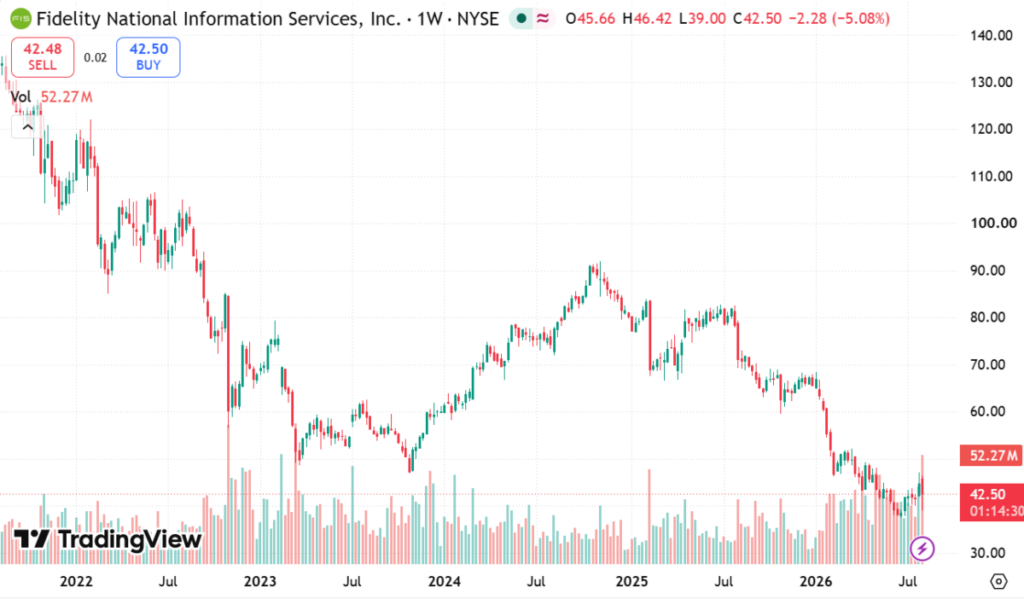
Investors later alleged that FIS had not fully disclosed challenges surrounding the acquisition and reached a $210 million settlement to resolve the claims.
Since then, FIS has focused on restructuring and simplifying its business. The company’s recovery depends on whether management can improve margins, stabilize payments operations, and rebuild investor confidence after years of acquisition pressure. The settlement removes some legal uncertainty, but long-term performance will depend on execution.
Catalent
Catalent became one of the biggest beneficiaries of the COVID-19 vaccine manufacturing boom, with investors viewing the company as a key player in pharmaceutical outsourcing. However, expectations around demand and operational execution eventually became difficult to maintain.
From 2021 through 2023, Catalent continued presenting a strong growth outlook. But problems emerged as the company disclosed manufacturing inefficiencies, inventory issues, and higher costs across several facilities.
The stock dropped approximately 30% after Catalent reduced fiscal 2023 guidance in November 2022. Additional disclosures about operational challenges in April 2023 pushed shares down another 26%.
Investors later claimed that Catalent had not fully disclosed internal problems affecting performance. The company agreed to a $78 million settlement.
Today, Catalent’s story has shifted from pandemic growth to operational recovery. After being acquired by Novo Holdings, investors are focused on whether the company can improve execution and benefit from long-term demand in pharmaceutical manufacturing. The settlement provides recovery for eligible investors, but the future value of the business depends on rebuilding margins and operational efficiency.
Hawaiian Electric Industries (HE)
Hawaiian Electric (NYSE:HE) became one of the most closely watched utility stocks after the 2023 Maui wildfire raised questions about infrastructure, safety practices, and risk disclosures.
Before the wildfire, the company highlighted efforts to reduce wildfire exposure through equipment maintenance, vegetation management, and grid improvements. However, after the Lahaina fire, investors questioned whether the company had fully communicated the risks surrounding its electrical system.
The stock fell approximately 49% during August and September 2023 as markets reacted to potential liability, regulatory pressure, and the financial impact of the disaster.

Hawaiian Electric later reached a settlement with investors over claims related to wildfire risk disclosures.
Unlike companies where settlements mark the end of investor concerns, Hawaiian Electric’s future remains closely tied to operational recovery. The company must manage wildfire-related costs, regulatory challenges, and infrastructure improvements while restoring confidence among investors.
The settlement may provide recovery for shareholders, but the stock’s long-term direction will depend on whether the company can rebuild financial stability.
Hub Cyber Security (HUBC)
Hub Cyber Security (NASDAQ:HUBC) entered public markets through a SPAC merger in 2023 with expectations of rapid growth and major cybersecurity opportunities.
The company promoted strong revenue prospects and highlighted strategic customer relationships. However, investor confidence weakened after concerns emerged around accounting practices, auditor resignation, and internal controls.
Following these disclosures, Hub shares declined more than 85% from post-merger levels as investors reassessed the company’s financial position and growth outlook.

Investors later filed claims alleging that the company had overstated business prospects and failed to disclose material risks. Hub agreed to an $11 million settlement.
The company remains one of the more uncertain recovery stories from the 2023 market losses. Future performance depends on rebuilding credibility, improving financial reporting, and proving that the business can generate sustainable growth.
Expensify (EXFY)
Expensify (NASDAQ:EXFY) entered the market in 2021 with a strong IPO narrative built around organic growth, customer adoption, and brand loyalty. However, after going public, investors began questioning whether the company could maintain its growth trajectory.
Shareholders alleged that IPO disclosures did not fully reflect challenges related to customer retention and seat expansion following earlier pricing changes.

The stock declined significantly after the IPO, falling from its $27 offering price to approximately $2.42 by the time investors filed their lawsuit. Expensify later agreed to a $9.5 million settlement.
Unlike companies facing major operational breakdowns, Expensify’s challenge has been rebuilding growth expectations. Investors are now focused on whether the company can expand its customer base, improve revenue growth, and prove that its business model can scale in a competitive software market.
Conclusion
For investors, settlements provide an opportunity to recover a portion of losses that might otherwise remain permanent. However, the settlement itself rarely determines whether a company recovers.
The next chapter for these companies will depend on fundamentals: profitability, management execution, transparency, and the ability to rebuild investor trust. As securities litigation continues following major market corrections, monitoring recovery opportunities has become an increasingly important part of protecting long-term portfolio value.
Benzinga Disclaimer: This article is from an unpaid external contributor. It does not represent Benzinga’s reporting and has not been edited for content or accuracy.
Login to comment