Samsung Electronics Co. (OTC:SSNFL) is accelerating the launch of its first semiconductor fabrication plant in Yongin to 2029, moving up the timeline by one to two years as demand for AI memory chips continues to surge.
Samsung Speeds Up AI Chip Expansion
On Sunday, Samsung said it now plans to begin operations at its first chip fabrication plant in Yongin, south of Seoul, in 2029 instead of the previously expected 2030-2031 timeframe, Reuters reported.
A Samsung spokesperson said the company intends to start operations at the facility "one to two years" ahead of its original plan.
At the time of writing, Samsung Electronics shares traded at 259,750 KRW (about $172), down 8.86% on the South Korean exchange, according to Benzinga Pro.
South Korea Bets Big On Semiconductor Manufacturing
The announcement follows fresh investment commitments made last month by Samsung and domestic rival SK Hynix Inc – ADR (NASDAQ:SKHYV) to expand semiconductor manufacturing in South Korea after President Lee Jae Myung called for measures to reduce regional economic disparities.
Under the government’s strategy, South Korea aims to double its memory chip production capacity within the next five years by accelerating construction of Samsung and SK Hynix fabrication plants in Yongin while developing a new semiconductor cluster in Gwangju.
Samsung Forecasts Record Quarterly Profit And Revenue
Earlier this month, Samsung estimated its April-June operating profit at 89.4 trillion won ($58.4 billion), up from 57.2 trillion won ($37.6 billion) in the previous quarter and 4.68 trillion won ($3.1 billion) a year earlier.
The company also forecast 171 trillion won ($112.3 billion) in revenue for the quarter, compared with 133.87 trillion won ($87.9 billion) in the first quarter and 74.57 trillion won ($49 billion) in the same period last year.
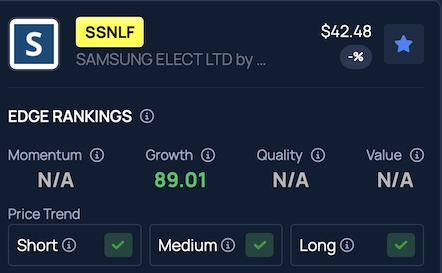
According to Benzinga Edge Stock Rankings, Samsung stock continues to demonstrate a positive price trend over the short, medium and long term.
Disclaimer: This content was partially produced with the help of AI tools and was reviewed and published by Benzinga editors.
Photo Courtesy: Kittyfly on Shutterstock.com
Login to comment